









The conversation around automation is no longer just about replacing manual work—it’s about redefining how businesses think, decide, and interact at scale. As artificial intelligence becomes more embedded in everyday operations, a new distinction is emerging that often gets overlooked: not all AI-powered tools are built to think, adapt, or act in the same way.
Many organizations still group chatbots and AI agents under the same umbrella, assuming they deliver similar value. But in practice, the gap between them is significant—and growing. While one follows predefined paths to respond, the other can analyze context, make decisions, and take action with minimal human input.
This shift matters. Choosing between chatbots and AI agents isn’t just a technical decision—it shapes how your business handles complexity, autonomy, and long-term innovation. In this guide, we’ll break down the core differences between AI agents vs chatbots, helping you understand not just what they do, but how they fundamentally change the way work gets done.

Defining the Difference Between AI Agents and Chatbots
Understanding the distinction between AI agents and chatbots is crucial for businesses aiming to implement automation strategically. Although both fall under the umbrella of conversational AI, they differ significantly in sophistication, adaptability, and intended function.
A chatbot is typically a rule-based software application designed to simulate human-like conversation through pre-programmed scripts or keyword triggers. These systems are often deployed to handle basic inquiries, automate responses to FAQs, and route customer requests efficiently. Chatbots follow a linear, predictable pathway that limits their ability to adapt to complex or multifaceted interactions.
In contrast, an AI agent operates with contextual awareness and autonomous decision-making. Built on advanced generative AI models and natural language processing (NLP), these systems analyze intent, emotion, and historical interactions to deliver personalized, dynamic responses. AI agents can manage multiple tasks simultaneously, integrate with enterprise systems, and make proactive recommendations—capabilities that substantially outperform traditional chatbots in modern business environments.
Technological Foundations of AI Agents vs Chatbots
The core difference between AI agents and chatbots lies in their underlying architecture and the degree of autonomy they possess. Here’s their key differences in terms of technological foundations:
Chatbots
Chatbots are typically built using rule-based logic, decision trees, or intent recognition systems. They rely on predefined scripts and structured datasets to respond to user inputs.
They work well for repetitive tasks such as answering FAQs, guiding users through simple workflows, or routing inquiries. However, their responses are limited to programmed scenarios, which means they can struggle when conversations become complex or unpredictable.
AI Agents
AI agents operate on machine learning models and transformer-based architectures that allow them to learn from interactions and adapt over time. Instead of following fixed scripts, they analyze context, interpret intent, and make decisions based on available data.
Beyond responding to questions, AI agents can access multiple systems, process structured and unstructured information, and execute tasks independently. This enables them to handle planning, reasoning, and operational actions, making them more suitable for complex enterprise workflows and intelligent automation.
Comparing Capabilities and Functions
| Feature | Chatbots | AI Agents |
|---|---|---|
| Core Function | Predefined scripted responses and FAQ handling | Dynamic, context-aware multi-task management |
| Intelligence Level | Rule-based and limited | Autonomous, adaptive learning from data |
| Data Integration | Minimal to moderate | Deep integration with enterprise ecosystems |
| Scalability | Limited by predefined flows | Highly scalable and performance-driven |
| Personalization | Generic interaction templates | Hyper-personalized conversation and prediction |
| Use Case | Customer FAQs, appointment scheduling | Customer engagement, process automation, analytics |
AI agents function as enterprise-grade digital employees, capable of executing tasks beyond conversational responses. They can perform analysis, trigger workflows, and provide insights by synthesizing real-time data across departments. For instance, an AI agent in retail might adjust inventory orders based on predictive analytics, while a chatbot would simply answer questions about store hours or product availability. This distinction reflects not merely a step forward in technology but a fundamental redefinition of value creation in digital ecosystems.
How These Technologies are Used for Businesses Across Industries
Organizations in every sector are transforming customer interaction and productivity through these technologies. Each industry benefits differently depending on its reliance on automation and strategic priorities. Understanding the right deployment framework ensures maximum ROI.
- Retail and E-commerce: Chatbots handle FAQs and order tracking, while AI agents deliver personalized product recommendations, manage supply chains, and predict shopping behaviors, enhancing both customer satisfaction and revenue efficiency.
- Healthcare: Hospitals have used chatbots for appointment scheduling, but AI agents bring diagnostic support, patient record automation, and real-time symptom analysis integrated with secure databases, ensuring more comprehensive care management.
- Finance and Banking: Chatbots can answer balance queries or branch details, whereas AI agents conduct fraud detection, predictive forecasting, and automated customer onboarding with higher security compliance.
- IT and Technology Services: AI agents manage incident resolution, system monitoring, and help desk optimization. Chatbots may handle ticket creation, but AI agents use predictive analytics to prevent issues before escalation.
- Professional Services: Legal firms and consultancies employ AI agents for document review, knowledge management, and cross-platform collaboration, driving higher billable efficiency and data-driven client engagement.
As enterprises scale globally, the boundaries between chatbot-driven communication and AI agent-driven execution become clearer. Intelligent agents enable business continuity and agility—qualities essential for achieving sustainable growth in a competitive, data-dominated economy.
Advantages of AI Agents for Enterprise Operations
Companies investing in AI agents often achieve superior long-term ROI compared to those relying solely on chatbots. AI agents deliver value through automation depth, operational intelligence, and strategic foresight. Unlike conventional chatbots, they continuously evolve within enterprise ecosystems to enhance accuracy and decision-making capabilities.
- Operational Efficiency: AI agents automate multi-step workflows and adjust to new data patterns without reprogramming, reducing manual dependencies.
- Data Intelligence: By integrating with analytics platforms, AI agents generate actionable business insights that support forecasting, procurement, and workforce allocation.
- Personalized CX: Adaptive algorithms allow AI agents to interpret emotional cues and personalize recommendations, fostering deeper customer loyalty.
- Multilingual Capability: AI-driven language models empower global reach, serving multilingual markets in the US, EU, APAC, and the Middle East seamlessly.
- Predictive Automation: Through pattern recognition and trend analysis, AI agents anticipate needs before they manifest—transforming reactive support into proactive problem-solving.
These advantages contribute to consistent performance improvement and considerable savings on training, recruitment, and system maintenance, particularly for multinational enterprises seeking scalable automation frameworks.
The Limitations of Chatbots in Modern Contexts
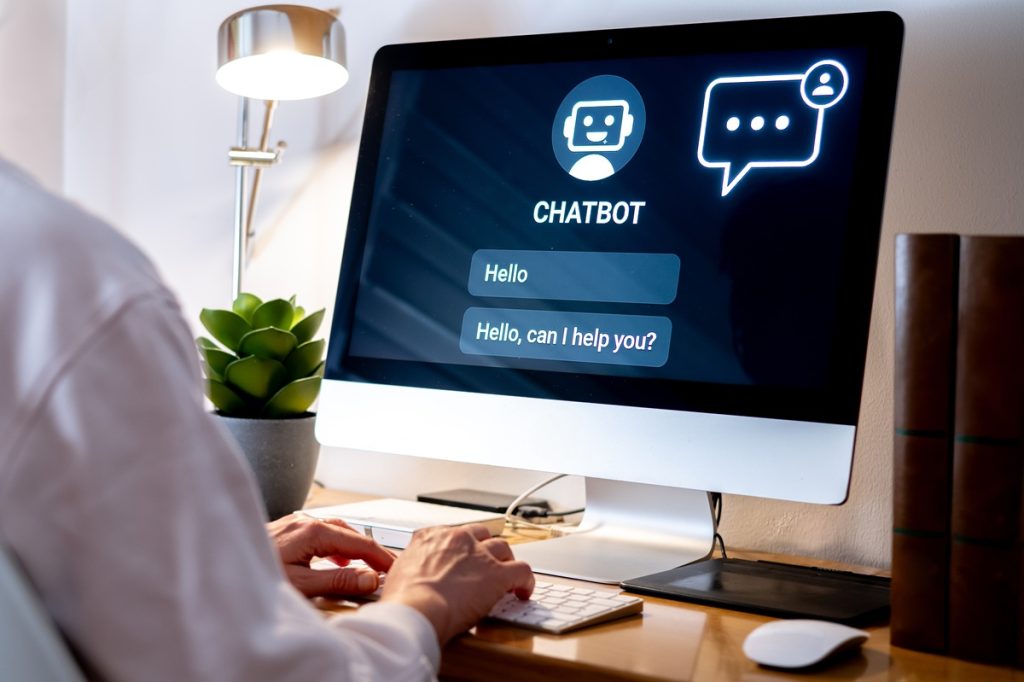
While chatbots remain cost-effective for basic automation, their limitations become apparent when user demands exceed pre-defined capabilities. Static dialogue flows often break down during complex interactions, leading to inconsistent user experiences and higher human intervention costs. Businesses relying entirely on outdated chatbot frameworks risk lagging behind competitors adopting adaptive AI agents.
In industries requiring nuanced communication—such as healthcare consultations, investment advice, or tech troubleshooting—chatbots fall short of delivering contextual understanding. They lack the ability to draw insights from behavioral or transactional data, making them less suitable for enterprise-grade performance requirements. Moreover, their customization demands frequent developer input, which can limit agility in fast-changing market conditions.
Modern consumers expect personalization, empathy, and responsiveness, all areas where AI agents excel. As digital transformation accelerates, organizations increasingly replace simple conversational bots with intelligent, autonomous solutions that reflect brand integrity while reducing service friction.
Integration with Outsourcing Models
Outsourcing companies are among the earliest adopters of AI-powered automation. Many global contact centers deploy chatbots for basic customer routing, but advanced BPOs now integrate AI agents to handle ticket triage, sentiment analysis, and workflow resolution without human escalation. This hybrid model merges AI efficiency with human empathy—maximizing productivity and maintaining service quality.
By combining AI agents with outsourced teams in countries such as the Philippines, India, and Eastern Europe, organizations achieve a unique blend of cost-effectiveness and innovation. AI-supported outsourcing enables continuous learning via logged data, improving KPIs such as first-contact resolution (FCR), net promoter score (NPS), and average handle time (AHT). As automation augments human staff, businesses report higher customer satisfaction and lower turnover among support agents, who can now focus on more strategic interactions.
This integration reflects a fundamental shift: outsourcing no longer concerns only labor arbitrage but value augmentation through intelligence. Companies leveraging AI within managed service contracts gain long-term competitive resilience, particularly in 24/7 global service delivery models.
Future Outlook: The Evolution of Intelligent Agents
AI agents represent the next frontier of enterprise automation. Future developments are expected to push these systems toward greater autonomy, emotional intelligence, and cross-domain cognition. As generative models evolve, AI agents will not only respond but predict, recommend, and execute processes with minimal human oversight. Their ability to function as digital coworkers will fundamentally reshape workforce models and cost allocation strategies.
According to leading AI solution providers, integration with Internet of Things (IoT) devices and real-time analytics tools will further expand application scope. In retail, AI agents could manage autonomous pricing algorithms; in logistics, they could monitor fleet efficiency using live telemetry data. Governance frameworks like GDPR, CPRA, and PIPEDA will also shape design requirements, ensuring compliance and data ethicality standards remain central to system deployment.
The marketplace is evolving from basic conversational technology toward adaptive networks capable of learning across organization-wide systems. For growing enterprises, the shift from chatbots to AI agents signifies more than technological progress—it symbolizes a strategic evolution toward sustainable digital maturity.
Empowering Growth Through Intelligent Automation
Organizations seeking a competitive advantage in 2026 require more than scripted automation; they need responsive intelligence. AI agents redefine business automation by blending contextual understanding with operational agility. Companies accelerating their digital transformation efforts can achieve sustainable efficiency with IT outsourcing services that integrate AI-driven systems, streamline processes, and future-proof enterprise scalability.
Frequently Asked Questions
What is the main difference between AI agents and chatbots?
AI agents can understand context, learn from data, and take autonomous actions across platforms, while chatbots follow pre-set scripts. Chatbots are reactive; AI agents are proactive and continually evolving across enterprise systems.
Which industries benefit most from AI agents?
Industries with complex customer journeys benefit greatly, including finance, healthcare, technology, and e-commerce. AI agents streamline workflows, improve accuracy, and enhance personalization beyond what chatbots can achieve.
How do AI agents improve customer support outsourcing?
Outsourcing firms use AI agents to manage routing, sentiment detection, and workflow automation. This minimizes manual intervention, improves service quality, and enables 24/7 global coverage with enhanced accuracy.
Are AI agents more cost-effective than chatbots?
While AI agents have higher initial setup costs, they deliver superior long-term savings through efficiency, automation depth, and the elimination of repetitive tasks, offering faster ROI for scaling organizations.
How will AI agents evolve in the future?
AI agents will expand their reasoning, emotional intelligence, and cross-domain integration capacities. They will function as digital coworkers capable of managing complex workflows under compliance-aware frameworks.